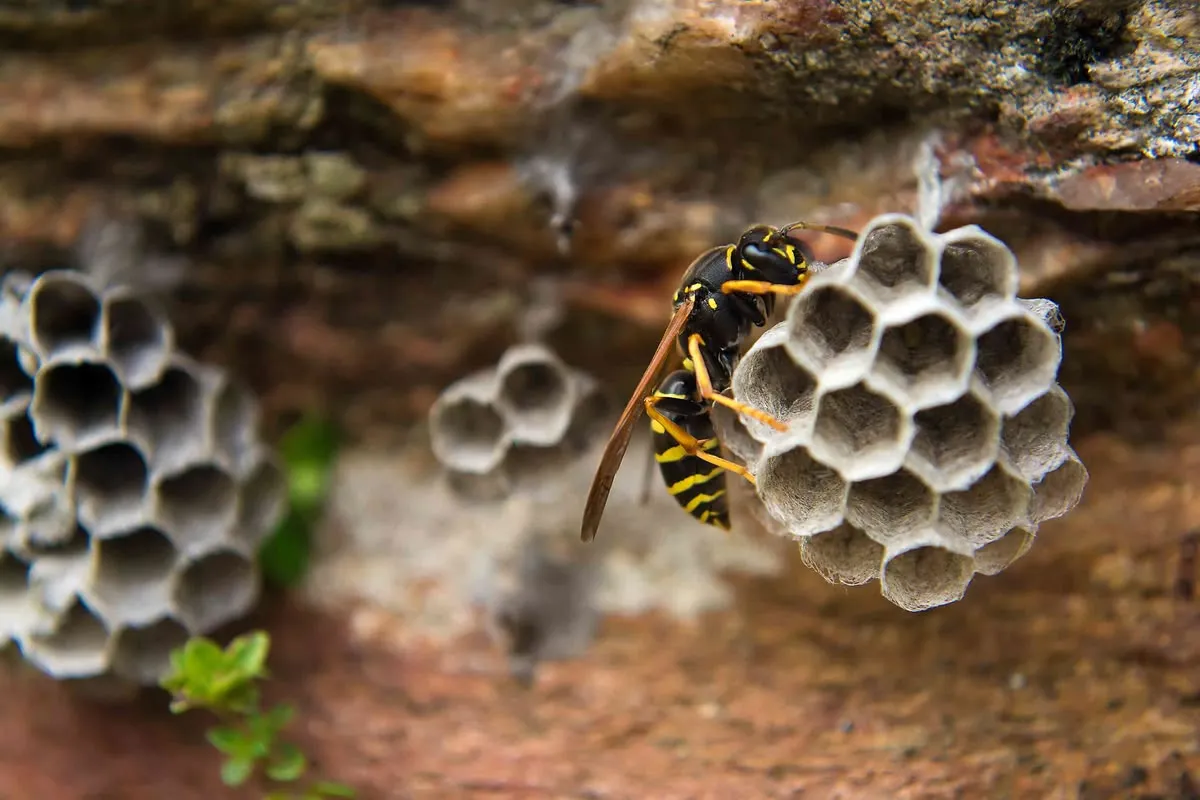
Identifying wasps indoors is highly annoying, and they can also be a biting threat. The problem gets worse when the wasp nest is hidden. The best way to get rid of a hidden wasp nest is to find the exact hole the wasps use, puff an insecticide dust into it at night, and leave the opening unblocked until the traffic stops. Skip the sealant, skip the traps, and skip the jet spray if the nest is deep inside a wall. That is the short version, and it lines up with what university entomologists have told homeowners for years.
How to Identify a Nest Inside Your Wall?
You almost never see a hidden nest. You see traffic. Look for a steady two-way stream of wasps at one small gap, usually a crack in siding, a soffit vent, a weep hole, or a spot where the roof edge meets the wall. On a warm afternoon, you may also hear a faint papery rustling from the wall.
Spend ten minutes watching from a safe distance around midday and note the exact spot. That one detail decides whether treatment works.
Fall adds a twist. When the weather cools, wasps from walls and attic nests often wander into living spaces, which Iowa State University Extension has documented for yellowjackets. A single stray wasp is a different problem, and our guide on how to get a wasp out of your house covers that calmly. A repeat parade of them is a sign of a nest nearby.
Why Wasp Spray Usually Fails Inside Walls?
Michigan State University Extension points out that concealed nests inside walls and attics are the hardest to remove, because the nest is often located a long way from the entrance and the spray never reaches the core of it.
Hardware store jet sprays are built for a nest hanging under an eave. Aim one at a wall hole, and you drop the guards at the door while the rest of the colony gets angry. Late in summer, a yellowjacket colony can hold thousands of wasps, according to Iowa State's yellowjacket guide, so an angry colony is not a small thing.
The Method That Actually Works
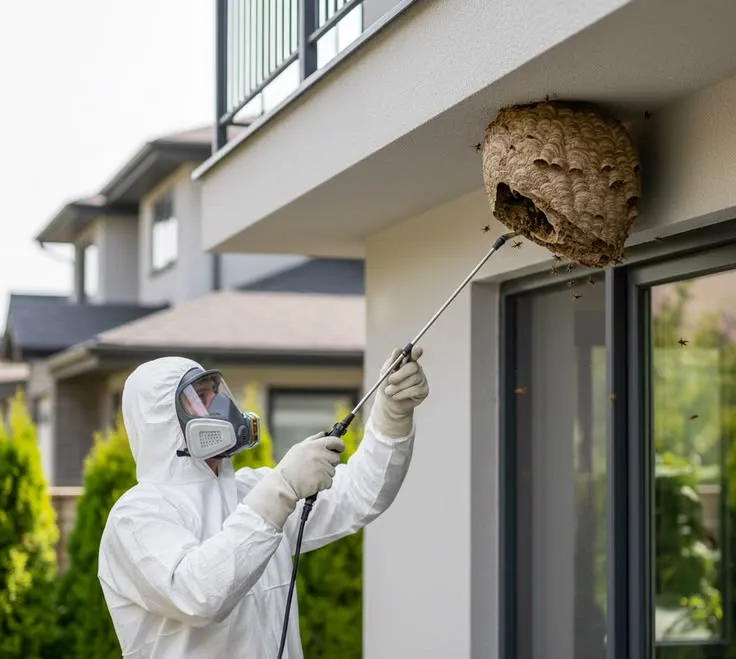
Here is the sequence I would follow, based on extension guidance from several land-grant universities.
- Confirm the entrance in daylight. Mark the wasp nest from a distance so you can find it in the dark.
- Go in at night or just before dawn. Most wasps are inside the nest then, moving slowly. Cover your flashlight lens with red cellophane or point it at the ground, because bright white light can set them off.
- Dress for the worst case. Wear long sleeves and pants, gloves, a hood or veil, and eye protection gear. Leave the nearest door unlocked and know your retreat path. Texas A&M AgriLife warns that one sting from an alarmed yellowjacket can excite others into mass stinging.
- Apply an insecticide dust labeled for wasps. University of Kentucky entomologist Michael Potter recommends dusting the nest opening with a bulb duster, using products such as deltamethrin or cyfluthrin dusts. A few light puffs are enough. The dust clings to wasps as they come and go and travels deep into the nest.
- Leave the hole open. Check the next evening. Iowa State says control usually shows up within a few days, and a second treatment after two or three days may be needed. Wall nests can stretch longer, and Texas A&M notes that two or more applications about a week apart are sometimes required.
- Seal only after silence. Iowa State advises against plugging a wall opening until you are sure that all activity has stopped.
- The trade-off nobody mentions is that dust is slow. You will spend two or three evenings watching wasps keep flying, and it feels like nothing is happening. That is normal, and it is still safer than a spray that angers the nest. Keep dust away from outlets, indoor vents, food areas, kids and pets, and read the label before you start.
What I Would Not Bother With?
Plugging the hole. This is the classic mistake. The University of Kentucky warns that blocking the exit of a nest behind siding can send wasps chewing inward and into your house. If you only do one thing differently after reading this, leave the hole open.
Traps as the main plan. A homemade wasp trap is a decent way to thin out foragers around a patio. But Penn State Extension says traps can reduce foraging workers and cannot eliminate an established colony. Hence, consider homemade wasp traps as crowd control and not nest removal.
Boric acid bait as the main plan. The idea is that foragers carry the bait home. Our breakdown of whether boric acid kills wasps explains the mix, but for a nest inside a wall, you cannot tell how much poison reaches it, and it takes time. I would treat it as the best backup, and keep it away from children and pets.
Fake paper nests. They are cheap and harmless, but they only discourage new queens from settling in spring. They do nothing to an existing colony.
Should You Just Wait Until Winter?
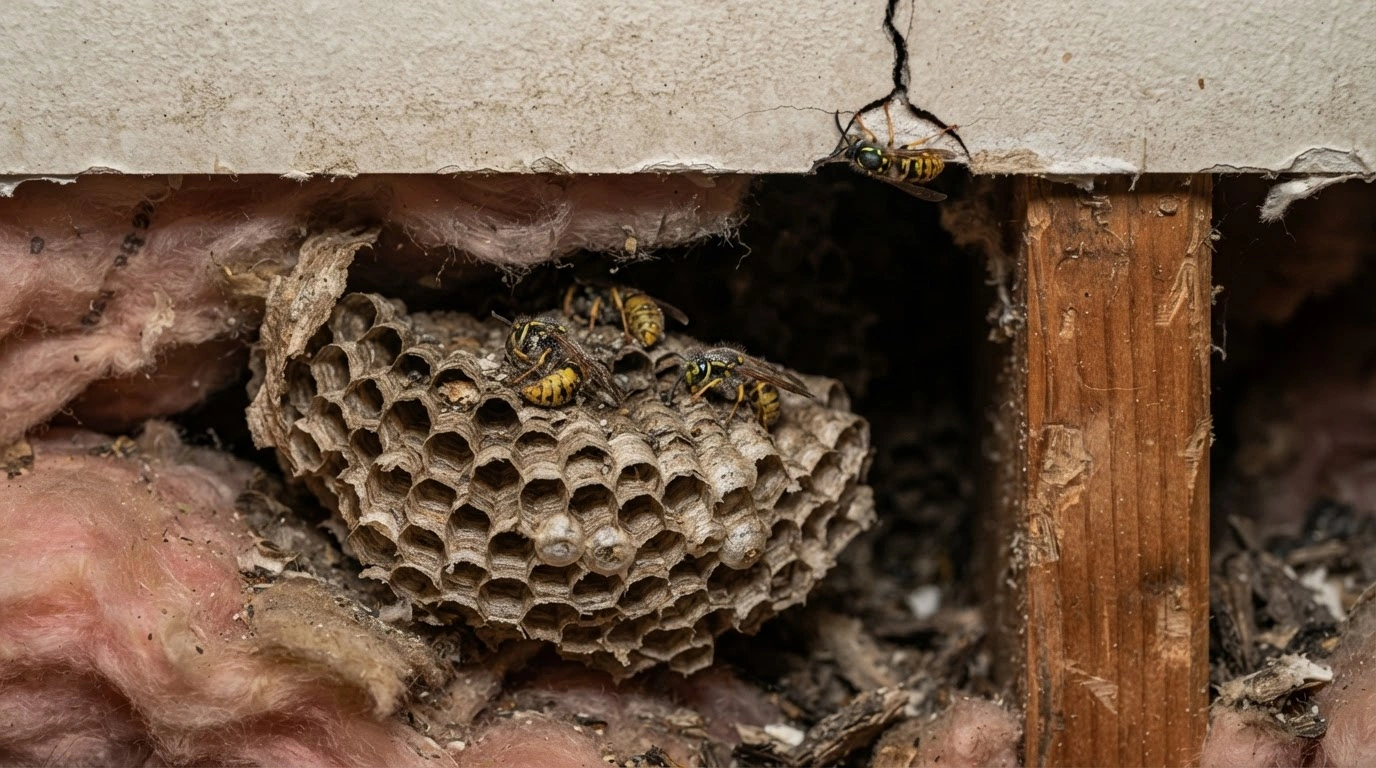
Sometimes, yes. It is November, and that changes the math. Yellowjacket colonies last for one season. Workers die with the first hard freezes, and the nest is not reused the next year, according to Iowa State. If the nest is in an out-of-the-way wall and you have already had freezing nights, leaving it alone is a reasonable call.
Two catches. A warm spell can wake sluggish wasps inside the house, and they can still sting. And the entry gap needs sealing in late winter, before queens go house hunting in spring. A dead nest can stay in the wall unless you are opening it up for another reason.
When to Call a Professional?
Skip the DIY plan and call a licensed pest control company if:
- Anyone in the home is allergic to stings.
- The nest is underground, and you cannot locate every entrance.
- The entrance is above comfortable ladder height.
- Wasps are already showing up inside living spaces every day.
- You suspect bald-faced hornets or a very large attic colony.
When you call, ask whether they use a dust treatment and whether a follow-up visit is included. A good answer to both is a good sign.