The upholstered headboard cost forty dollars at an estate sale, and it looks great against the freshly painted bedroom wall. Before it goes up, give it the same slow once-over you'd give a used dresser for water stains or loose joints. Secondhand beds, headboards and nightstands are among the easiest ways for bed bugs to get into a home. So as you run a hand along those seams, you're probably wondering: would I even notice them?
What Bed Bugs Look Like at Every Age
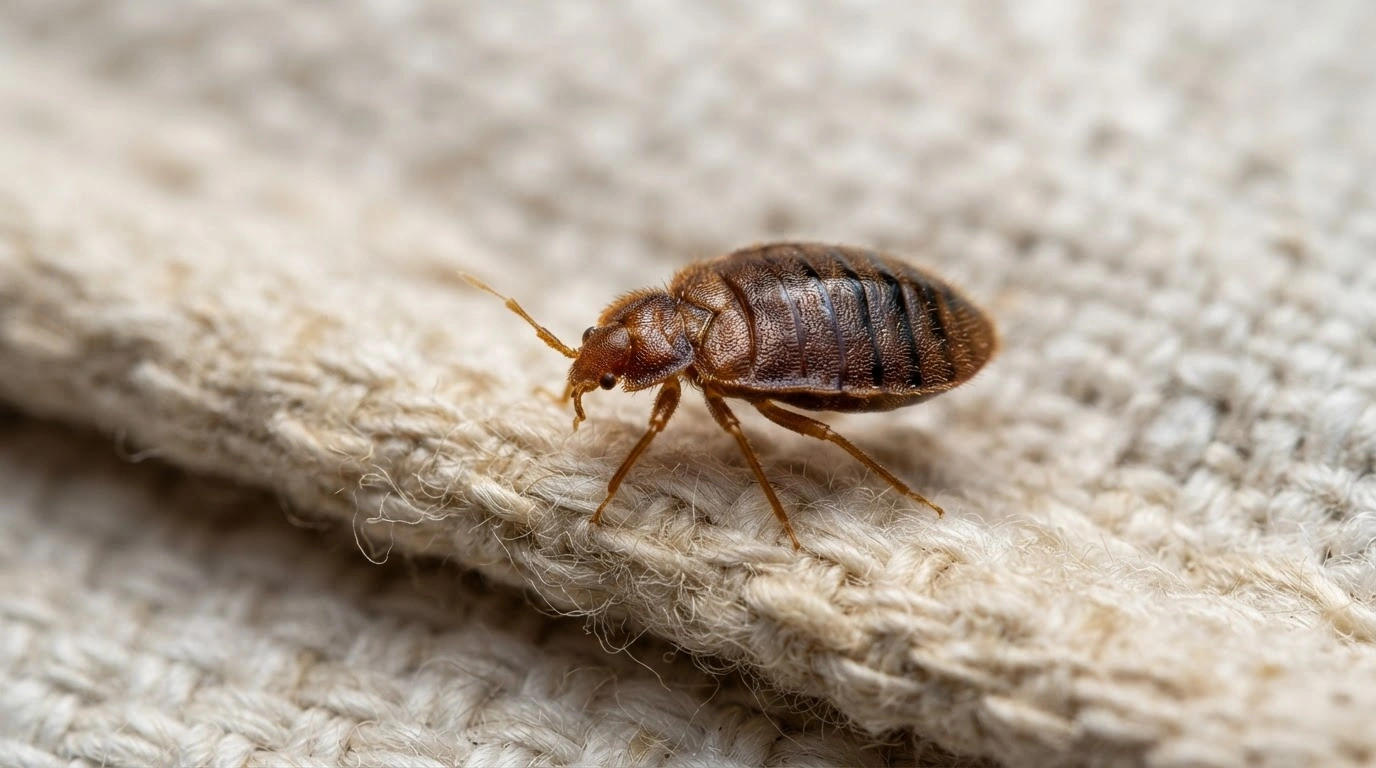
The honest answer to can you see bed bugs with the naked eye is yes, but only for some of them. Adults are reddish-brown and about the size of an apple seed. Newly hatched nymphs are pale and smaller than a pinhead, so finding them often takes a flashlight and a magnifier. That gap matters. An infestation usually includes all three stages long before the adults become obvious.
According to EPA, adult bed bugs are roughly the size of an apple seed and can be seen with the naked eye, while eggs and young nymphs are much harder to spot. An unfed adult is flat and oval, like a tiny lentil. After a meal it swells, stretches out and darkens to a rusty red. Eggs sit glued into crevices. Nymphs only become easy to see once they've fed, when a red dot of blood shows through their see-through bodies.
| Stage or detail | What to look for |
| Adult size | About 5-7 mm long, roughly an apple seed, visible without magnification |
| Eggs | About 1 mm, pinhead-sized, pearl-white and easy to miss without close inspection |
| Young nymphs | Smaller, translucent or whitish-yellow, nearly invisible until after a blood meal |
| Main hiding spots | Mattress seams, box springs, bed frames and headboards |
Keep a 10x hand lens and a bright LED flashlight in your nightstand drawer. Together they cost less than a set of pillowcases, and they turn a vague "is that a speck of lint?" moment into a real answer.
Housekeeping Habits That Keep Them Out
Most bed bugs are hitchhikers. They ride home in suitcases, gym bags, moving boxes and thrifted furniture, so your best defense is at the front door, not in the bedroom.
Travel is the big risk. In a hotel, put your suitcase on the luggage rack or in the bathtub, never on the bed, and before unpacking, peel back the fitted sheet at one corner to check the mattress seam. Back home, unpack in the laundry room or garage instead of on your bed.
Then use heat.
Bed bugs and their eggs don't survive a long, hot dryer cycle. Clothes from a trip, a dorm move-out or a sleepover can go straight into the dryer on high for 30 minutes, even if they're clean. A simple monthly routine covers the rest:
- Vacuum mattress seams, box spring edges and the gap behind the headboard with a crevice tool, then empty the canister outside.
- Wash and dry bedding on the hottest setting the fabric allows.
- Clear clothes, bags and boxes off the bedroom floor to cut down on hiding places.
- Inspect secondhand furniture in the garage with your flashlight before bringing it indoors.
Bedroom Choices That Make Checks Easier
If you're redoing a bedroom anyway, a few design choices will speed up every future inspection. Tufted, button-studded and fabric-wrapped headboards look cozy, but every fold is a hiding spot. A metal frame or a smooth, sealed wood headboard leaves bugs few places to tuck in, and you can scan the whole thing in under a minute.
Pale sheets help. Dark spots and tiny smears that would vanish on navy or patterned linens stand out on white or light gray. Add a zippered, bed-bug-rated encasement on both the mattress and box spring. It seals off the seams and leaves a smooth surface where anything crawling is easy to see.
Placement matters too. Pull the bed a few inches from the wall, keep the bed skirt off the floor, and skip under-bed storage bins if you can. Then spend ten minutes one weekend running a bead of caulk along gaps in the baseboards and loose trim near the bed, closing off the hiding spots nearest to where you sleep.
Signs Worth Checking Before Calling a Pro
Young bugs are so hard to see that the traces they leave are often easier to find than the insects. Check the mattress piping for clusters of dark dots, as if someone had tapped it with a fine-tip marker, that smear when wiped with a damp cloth. Small rusty stains on sheets, papery tan shed skins, and pale eggs wedged into seams or screw holes are other giveaways.
Bites tell you little. Many people don't react at all, and others mistake mosquito or flea bites for bed bugs. Treat skin marks as a reason to inspect, not as proof.
To keep watch over time, set cheap interceptor cups under each bed leg. Bugs climbing toward the bed get trapped in the outer well, and a quick weekly look tells you whether anything is moving at night.
Call a licensed pest professional if you find live bugs in more than one spot, see them in a second room, or keep finding fresh spotting after a thorough cleaning. Don't reach for store-bought foggers or sprays; they tend to drive bed bugs deeper into walls and furniture, making later treatment harder and more expensive. Leave the bedding in place, take a few clear photos by flashlight, and let the inspector see the evidence exactly as you found it.