
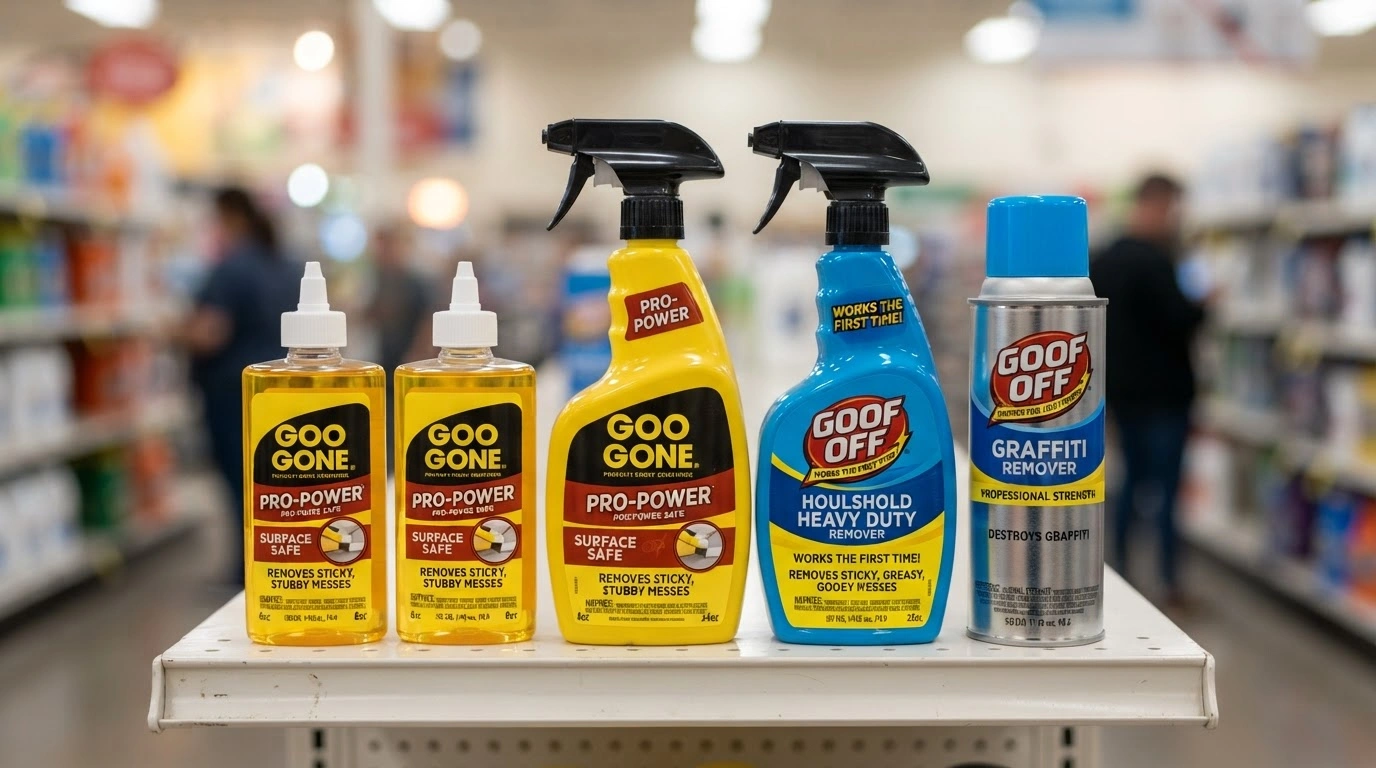
Removing the sticky residue of a price tag or a sticker is a challenging task. People often look for ways to remove the residue. Though Goo Gone is one of the best products to remove sticky residue, many users don’t prefer it due to its unpleasant smell. They look for alternatives to Goo Gone to clean the sticky mess from the bottle or jars. This blog primarily highlights the best alternatives to Goo Gone, including homemade solutions.
What Can You Use Instead of Goo Gone? Quick Answer
| Alternatives to Goo Gone | Features | Things It Removes | Quick Tip to Use | The Surfaces on Which It Works Best |
| Goof Off |
|
Dried paint, glue, tar and permanent markers |
|
Plastic and non-plastic surfaces |
| 3M Speciality Adhesive Remover |
|
Tar, tape residue, decals and grease. Also, removes sticky stains from metal, glass or plastic. | It is a best option for car owners to remove bumper stickers | Painted as well as unpainted surfaces |
| WD-40 | It’s an adhesive remover | Sticker residue, duct tape marks and tree sap | Simply spray it and allow it to rest for a minute and then wipe the gunk with a clean cloth. | Works on metal, glass and some of the plastics |
| Baking Soda and Oil paste | It is affordable, non-toxic and have a nice smell | Sticky stains | Apply the paste on the sticky spot, let it sit for a while to loosen the residue. Then, gently scrub the surface with a cloth or a sponge | Works on glass, wood and some of the painted surfaces |
| Rubbing Alcohol | It evaporates quickly | Sticky stains | Perform a spot test because alcohol can make certain finishes dull. Dab a little alcohol on a cotton ball and hold it on the sticky areas for a while. Then, rub gently. | Works on smooth and non-porous surfaces like glass, stainless steel or countertops |
| White Vinegar | A safer option for delicate surfaces | It removes grease, dissolves mineral deposits and other sticky stuff | Soak a cloth in vinegar and firmly press it on the residue for a while. The acid in the vinegar helps break down the adhesive. Lastly, simply wipe the surface. | Works on even delicate surfaces without leaving any residue |
Household Products You Can Use Instead of Goo Gone
You can use several homemade products instead of Goo Gone. Here they are:
Coconut Oil and Baking Soda
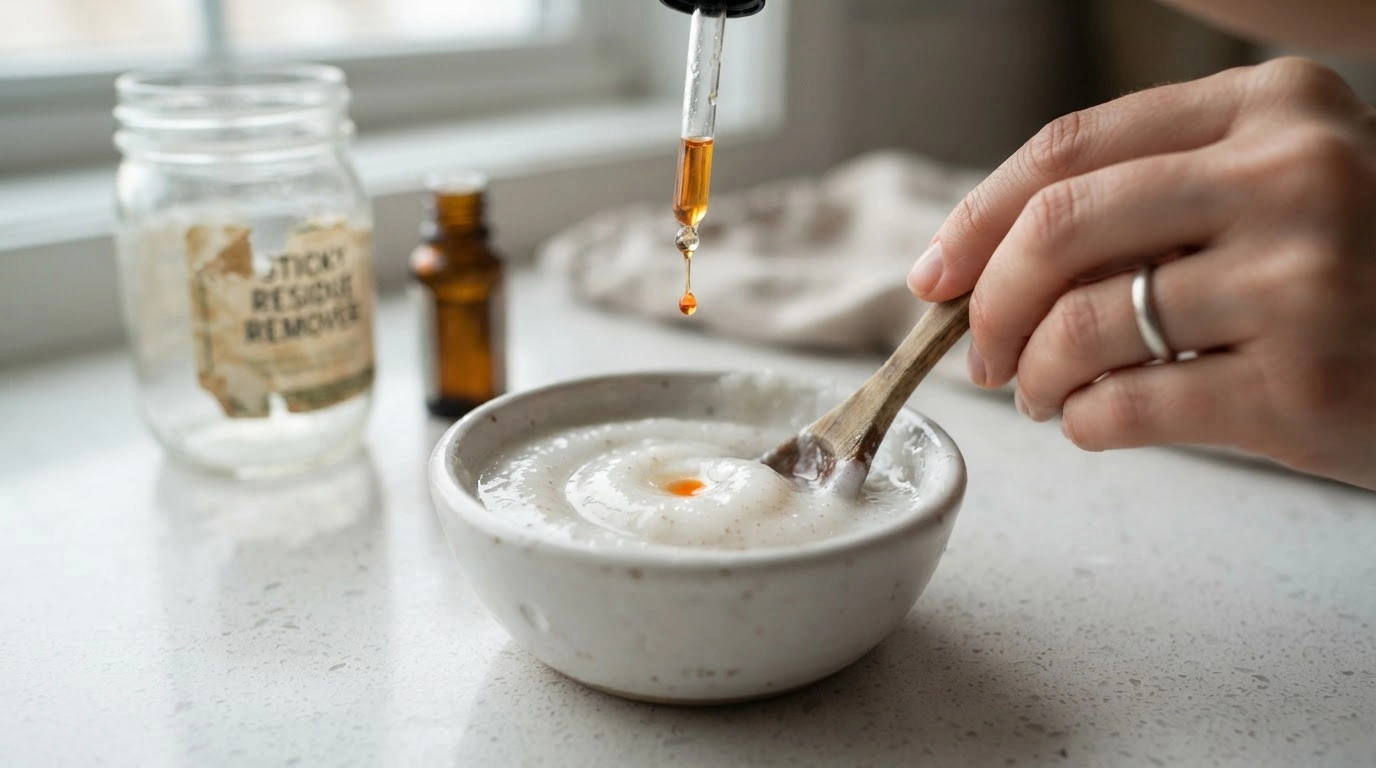
- Mix equal parts baking soda and coconut oil. Then, add a drop of orange essential oil for a pleasant smell. The mixture may take time to form the paste, so be patient.
- Peel off as much sticker as you can, apply a generous amount of paste to the surface, and let it sit for some time.
- Then, scrub the paste gently and wash the container with warm water and soap. If you notice any residue left on the surface, repeat the process.
Dish SOAP and Warm Water
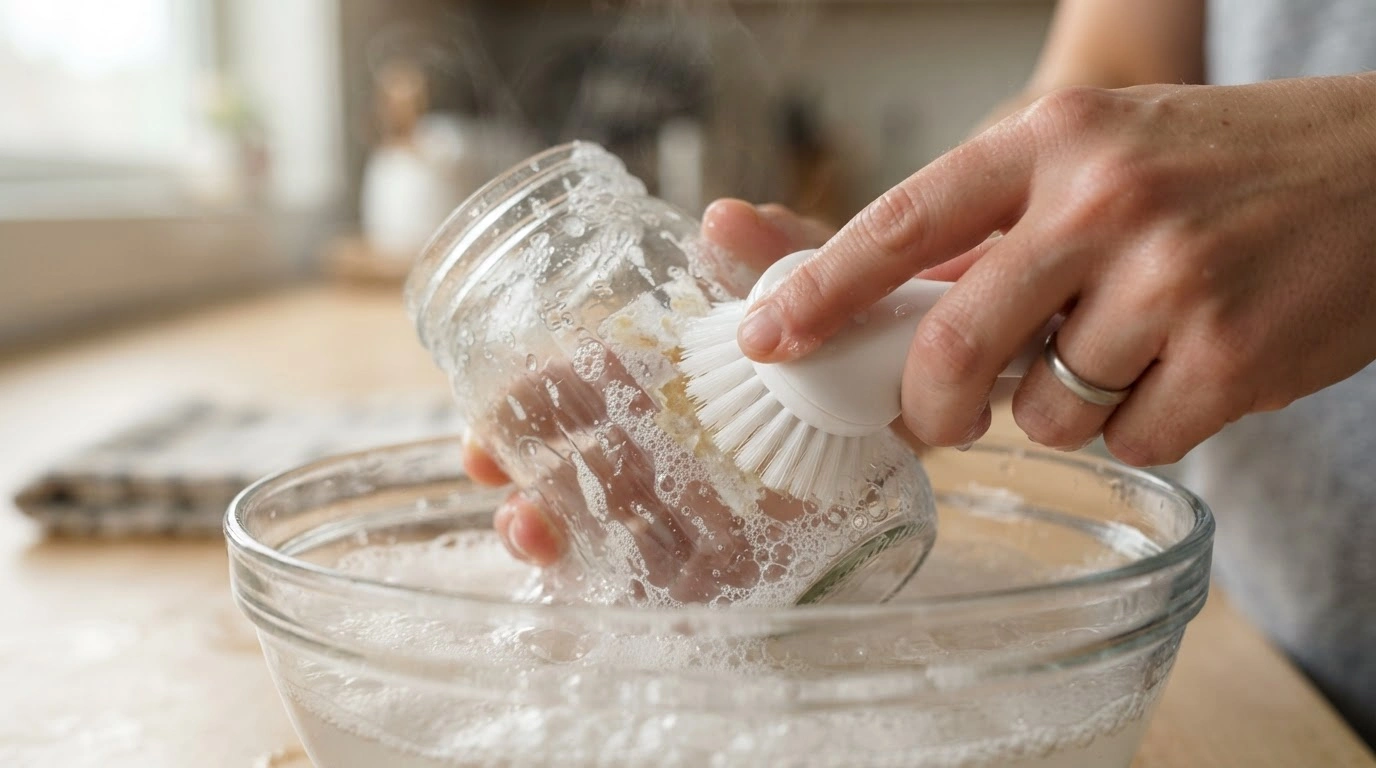
- Dish soap used with warm water is an effective adhesive remover. Dish soap has two ingredients; solvent that breaks down the adhesive and surfactants that lift the residue in the water, making it easy to wash.
- This method works best on glass, plastic, ceramic, and metal because you can soak the items in the solution for about an hour.
- Dish soap methods also work on floors, tabletops, or painted walls or doors, even though you can’t soak them.
- The method is quite simple. Add two drops of dish soap to two cups of warm water and soak items for an hour. For tabletops or floors, spray the solution. In both cases, check if residue has started to break down. Then gently rub the adhesive with your hand or a scrub brush.
Which Goo Gone Alternative is Best for Different Types of Residue?
Each Goo Gone alternative works differently on residue, depending on the type. Here is a list of residue types and the Goo Gone alternatives that work effectively.
- Sticker and Label Residue- Baking soda, melted coconut oil, and sweet orange oil.
- Tape Residue- Acetone
- Glue- Goof off
- Old, Hardened Adhesive- Dish soap and warm water
- Residue Left by a Product Label- Paste of baking soda and water
Can Household Products Replace Goo Gone?
Yes, you can replace Goo Gone with household products like baking soda and coconut oil or dish soap and warm water. White vinegar also works well on sticker residue. The best thing about these products is that they're easy to find at home.
How to Choose a Safe Goo Gone Alternative?
While selecting an alternative to Goo Gone, there are certain factors you should consider, which are:
- Identify the Type of Residue- The first factor to consider is the type of residue you're trying to remove. This is because some options, like WD-40, work well on sticker residue, while acetone is good for tape residue.
- Check the Surface- The surface on which the solution is used matters a lot. For example, paste made with baking soda and oil works better on painted surfaces and wood, whereas white vinegar isn't suited for delicate surfaces.
- Test a Hidden Area- Spot testing is a smart way to see whether the solution works for the surface and the type of residue. Using the solution directly on the surface can cause severe damage and may not even remove the residue.
Does WD-40 Work as an Alternative to Goo Gone?
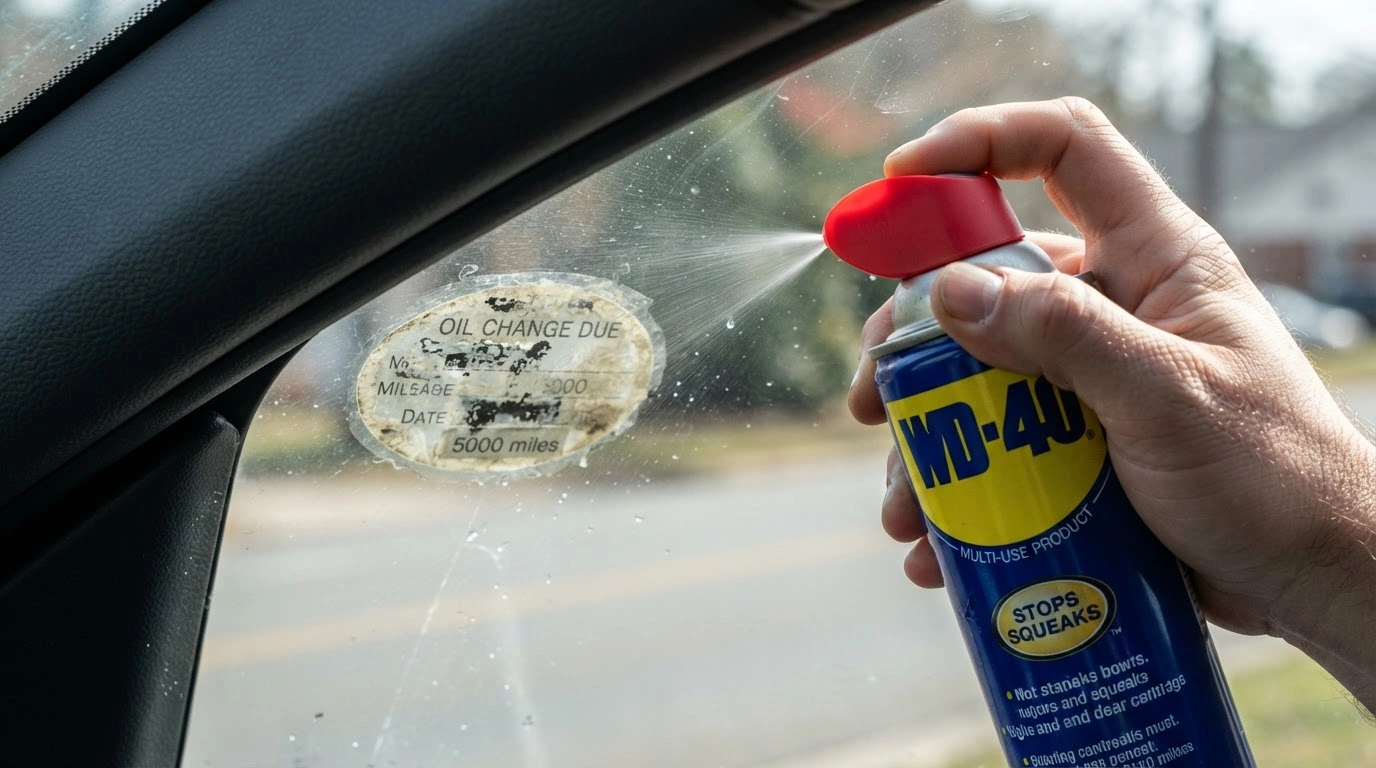
It does work as an alternative to Goo Gone. Although it's not technically an adhesive remover, it can effectively break down sticky residue. Spray a little WD-40 on the residue and allow it to sit for two minutes. Then, wipe the surface with a cloth. It is often used to loosen sticker residue, duct tape marks, and tree sap.
When Is a Goo Gone Alternative Not the Best Option?
A Goo Gone alternative isn't suitable for delicate plastics, unfinished wood, or painted surfaces. This is because the solvent in most alternatives can damage the surface.
Conclusion
There are various alternatives to Goo Gone, and each one works effectively to remove residue left behind by price tags, duct tape, and many others. However, you should not use it on certain plastics or unfinished wood because the solvent may cause melting or stripping.