
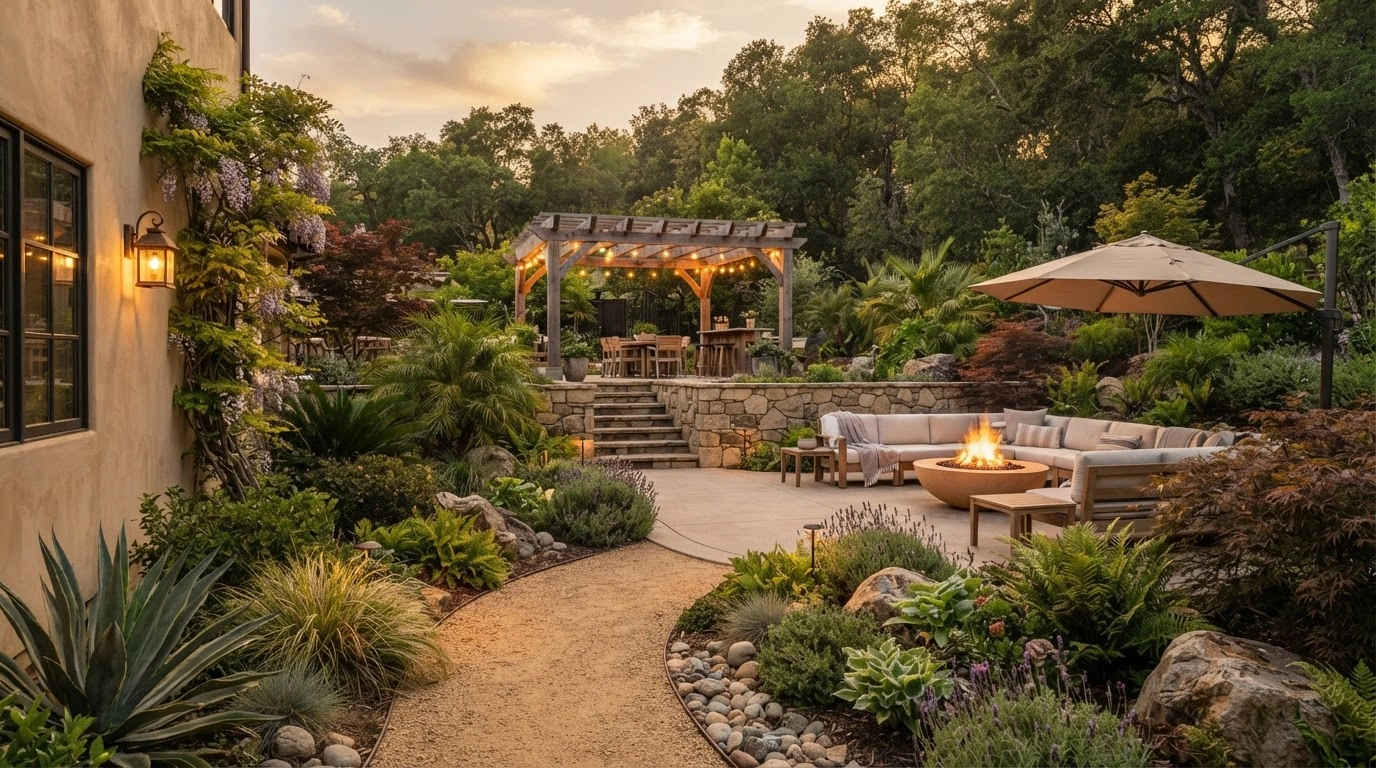
Decomposed Granite (known as DG) is a popular landscaping material, preferred for its natural look and cost-effectiveness. They are easy to maintain and durable. The fine granite particles make a smooth surface which traditional gravel cannot match. Decomposed granite comes in various colors and types, making it a great choice for many landscapes. From patios to driveways, decomposed granite works as a perfect landscaping choice.
This blog will cover everything you need to know about decomposed granite and share some amazing landscaping ideas for using it.
Understanding Decomposed Granite
Decomposed Granite is a weathered rock that looks similar to gravel; however, it is much finer than gravel. In landscaping industry, decomposed granite is referred to as granular stone surfacing material in which the particles sizes range generally from ⅜” down to very fine dust. Different particle sizes create the right blend: larger particles provide strength, medium particles fill the space, and fine particles bind the mixture together.
Different regions use different names for decomposed granite. A few alternate names for decomposed granite include rock dust, crusher fines, disintegrated granite, and chat.
Use in Landscape
Decomposed Granite is an all-purpose landscape rock which is available in various colors. Decomposed granite is used for patios, garden pathways, flowerbeds, parks, driveways, and other high-traffic areas. Decomposed granite is very strong, and when combined with soil stabilizer, it can last for many years. Decomposed granite is an appealing choice if you want a simple, hassle-free landscaping.
Types of Decomposed Granite
There are three types of decomposed granite. They are: loose, stabilized, and resin-coated.
-
Loose
Granite accumulations without any additives are called loose decomposed granite. It is budget-friendly and well draining. You can bind loose decomposed granite to create a more solid surface; however, washed-away granite (caused by erosion) needs to be filled.
-
Stabilized
Stabilized decomposed granite has a stabilizer additive combined with granite aggregates. Stabilized DG is costlier than loose DG, however, it is less costly than concrete or asphalt. Stabilized DG looks like loose DG but resists erosion and needs low maintenance.
-
Resin Coated
Generally used for driveways and parking areas, resin-coated decomposed granite is similar to asphalt. Resin coated DG is the costliest option among the three types of DG. It has the highest durability but least permeability.
Difference Between Decomposed Granite And Gravel
Decomposed Granite
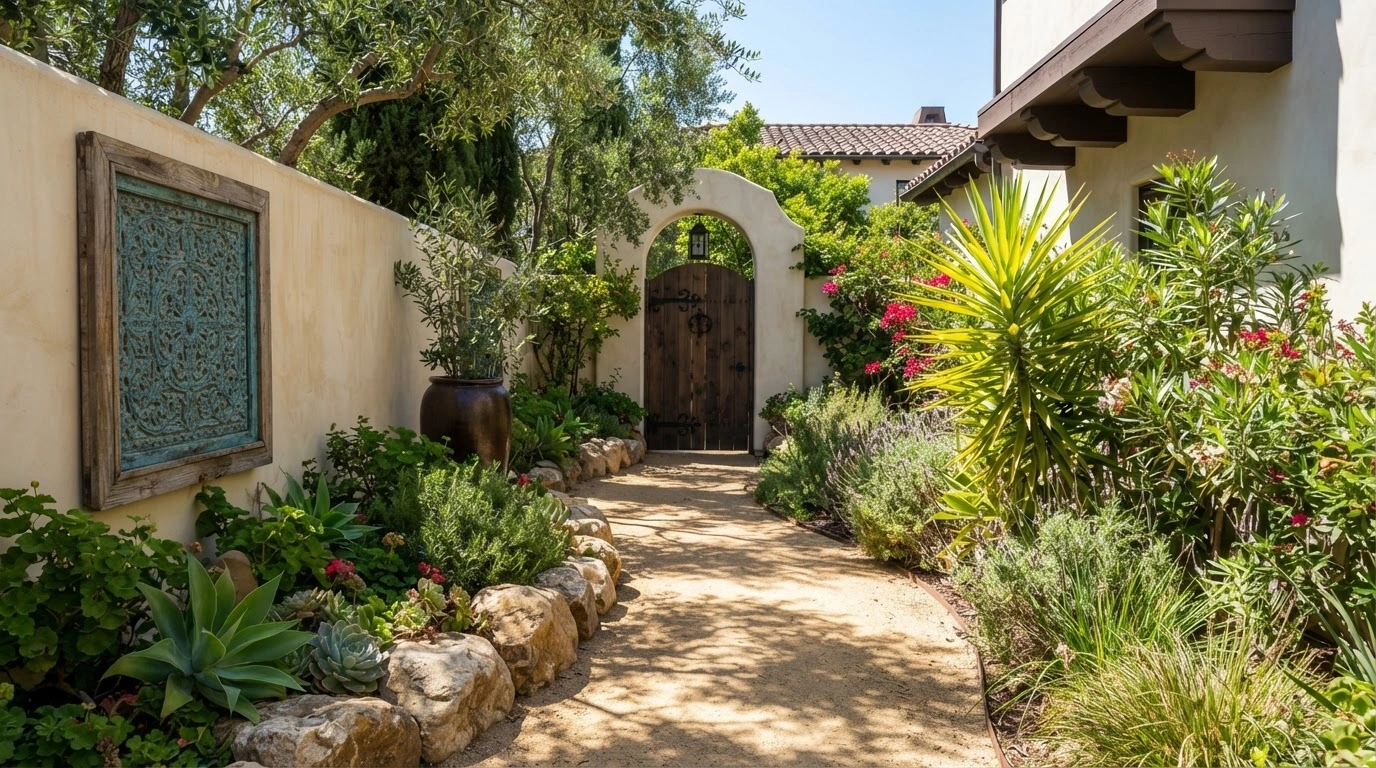
- Forms a firm surface
- Easier to walk on
- Creates a smooth surface
- Natural-looking appearance
Traditional Gravel
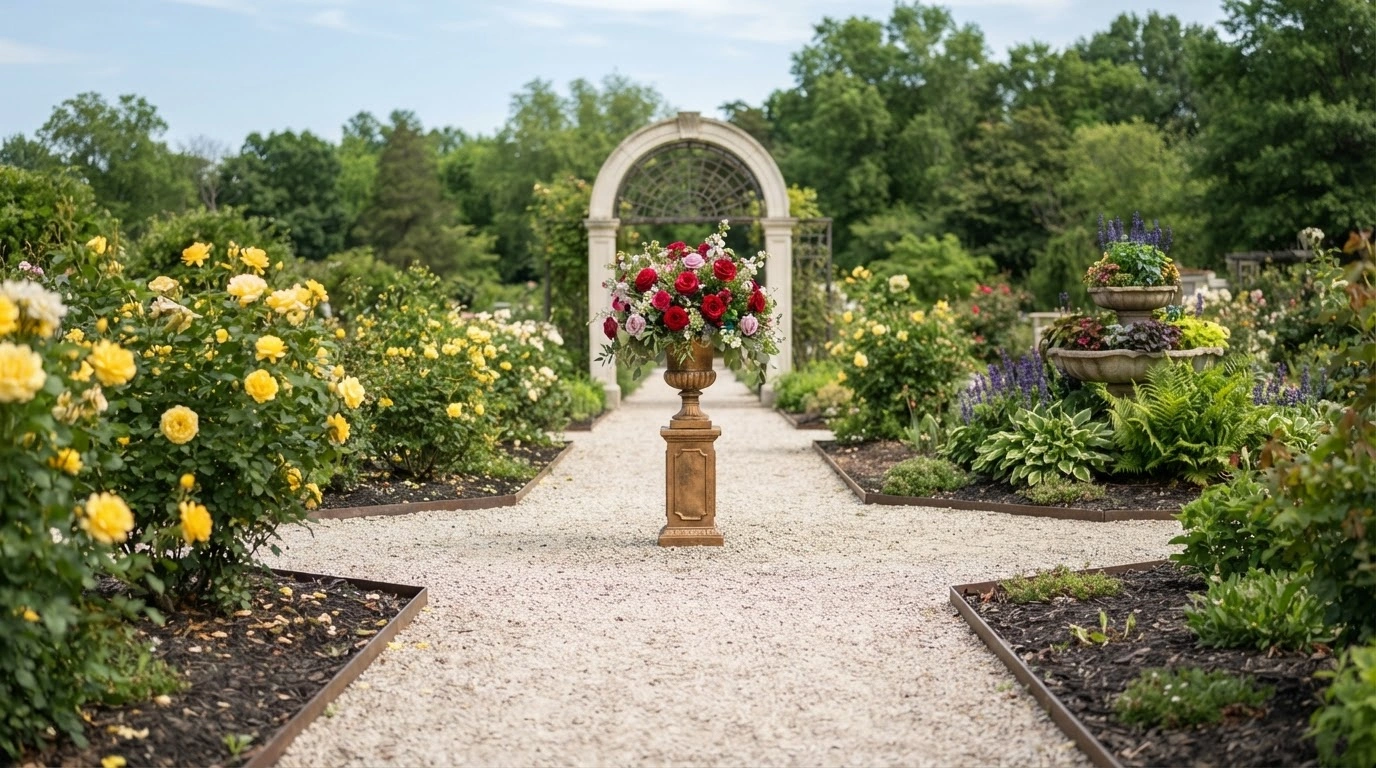
- Less firm underfoot
- Slides more easily
- Usually used for drainage
Key Benefits of Decomposed Granite
Decomposed granite has gained popularity because of the following key benefits:
- Becomes stable and easy to walk on
- Gives a natural, organic look
- Good water draining ability
- Low maintenance needed as compared to other classic hardscapes
- Less costly than concrete or pavers
- Goes well with both modern and classic designs
- Durable and lasts for a long time
Disadvantages of Decomposed Granite
Though decomposed granite has many benefits, it also has disadvantages. They are:
- It can get eroded in areas with heavy rainfall or traffic.
- Decomposed granite is more costly than regular gravel.
- It requires stabilization for long-term durability.
What is the Cost of Decomposed Granite?
Raw materials cost about $40-$50 per cubic yard and can be bought from landscaping suppliers. Hiring a contractor to install a path or patio costs about $ 4 to $6 per square foot. This cost will bbe about half if you do it yourself. A resin-coated decomposed granite driveway can cost more because it has a surface similar to asphalt (but is permeable). For the exact price, ask a local driveway installer.
Decomposed Granite Landscape Ideas
Decomposed granite can be used in various landscapes. Here are a few example:
-
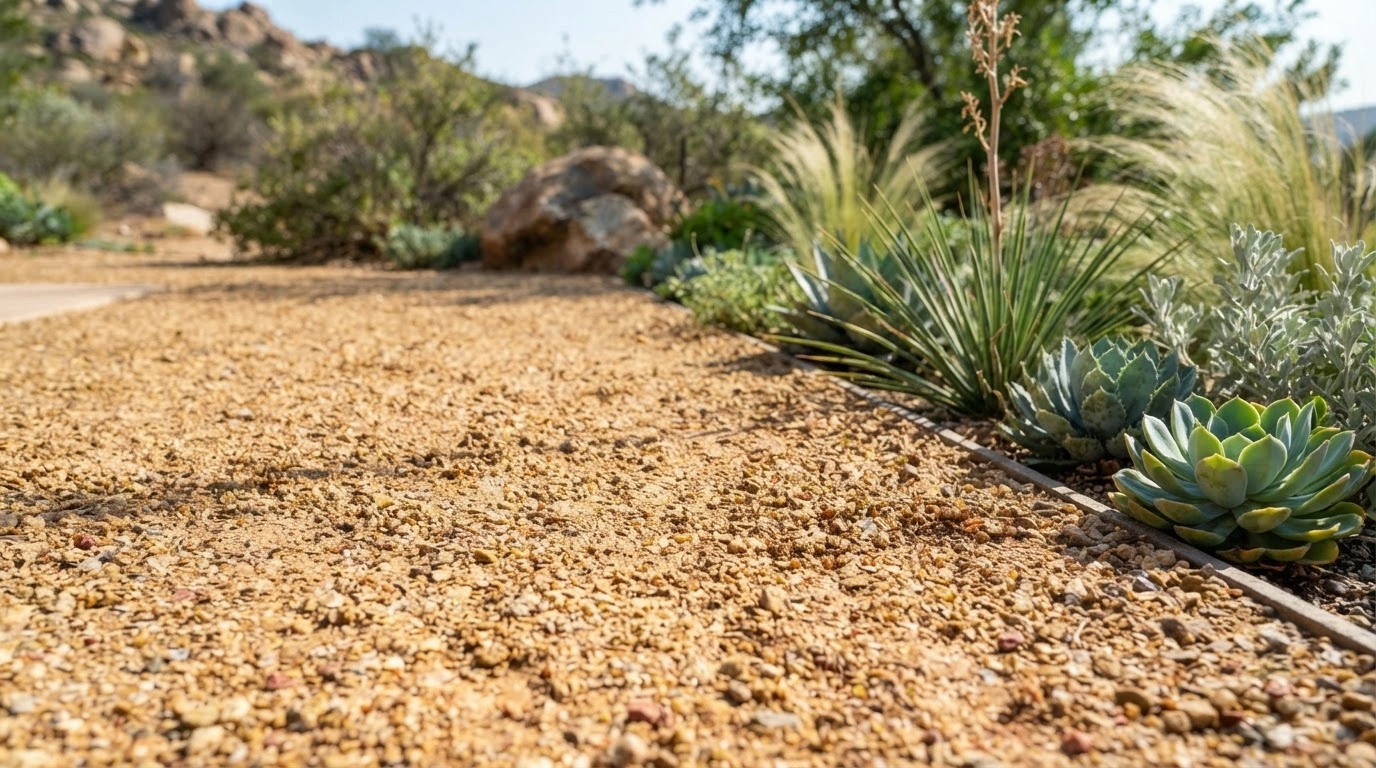
Patio Ground Cover
AI Generated Image: Intriera
Decomposed granite is used in a xeriscaped garden, like gravel, sand, or crushed rock. DG is also an ideal choice for patios because it drains well and keeps weeds from growing through. DG also works well as mulch. Since decomposed granite won't decompose, it lasts longer than wood mulch. These features, along with its longevity makes DG a good investment.
-
Pathway or Garden Trail
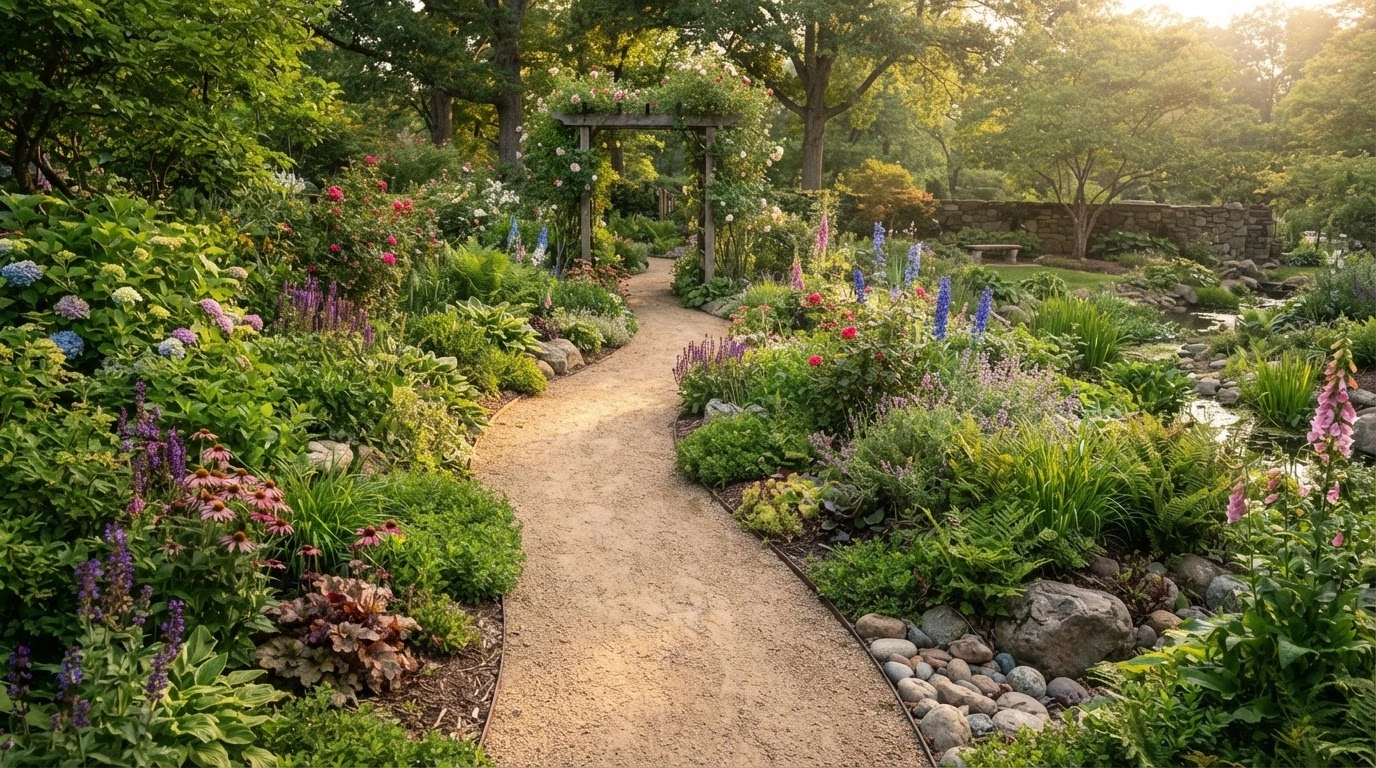
AI Generated Image: Intriera
Decomposed granite is also used for making pathways or garden trails. The edges of DG are blunt, which makes it easier on the feet and gives a sand-like feel. However, when DG is compacted or stabilized, it can feel harder than the sand. DG is made of fine particles, and can be used in inclined areas if mixed with soil stabilizers.
-
Play Area or Sport Surface

AI Generated Image: Intriera
Decomposed granite can also be used in play areas or sport surfaces. Because of its weather resistance and value, decomposed granite is commonly used in baseball diamonds and running tracks. DG is often mixed with clay to make a smoother surface for active play.
-
Driveway
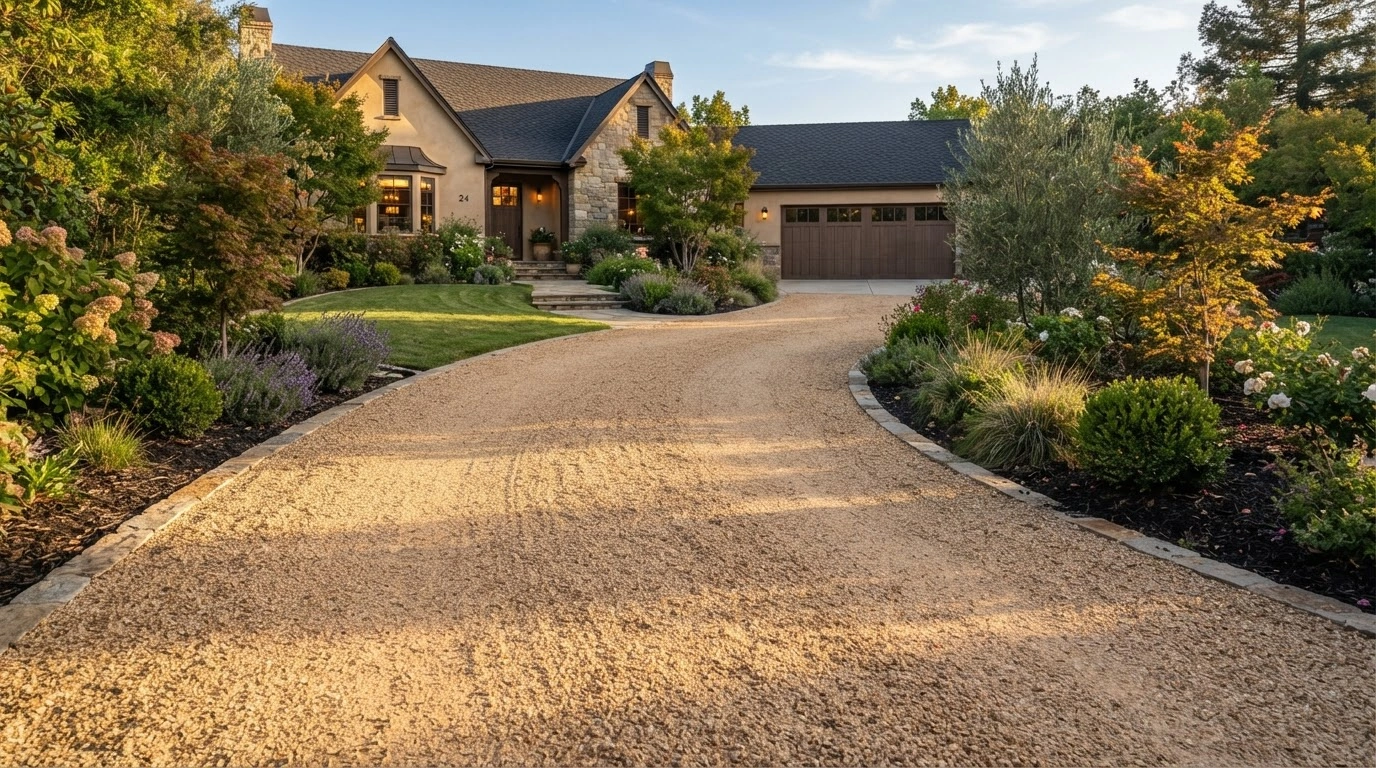
AI Generated Image: Intriera
Decomposed granite is an ideal choice for a driveway because it is a budget-friendly solution with good drainage and durability. People also love its crunchy sound. Because decomposed granite is available in various colors, you can match it to your home to enhance the look. You can choose graphite gray or golden white ice for a traditional look, or go for a vibrant colour like brimstone.
How to Pick the Right Decomposed Granite Colour?
Decomposed granite comes in a wide range of colors. The best color choice depends on whether you want a neutral or an accent colour. A simple rule for choosing colors is to keep the front colors inviting and appealing, and let the backyard colors stand out.
Conclusion
Overall, decomposed granite is an ideal option for many landscapes. Its appearance, durability, and low cost make it a simple yet attractive landscaping choice. From patios to driveways, decomposed granite can work well in many areas. The wide range of colors makes it even easier to choose the best option for your design.