You do not need a spare room or a garage full of equipment to make space for movement at home. A corner of the living room, the end of a hallway or a patch of floor beside the bed can be enough for stretching, mat exercises and a few minutes of quiet. The trick is to design the spot so that it feels inviting and is ready to use at a moment's notice. Here is how to set one up.
Choosing the Right Spot
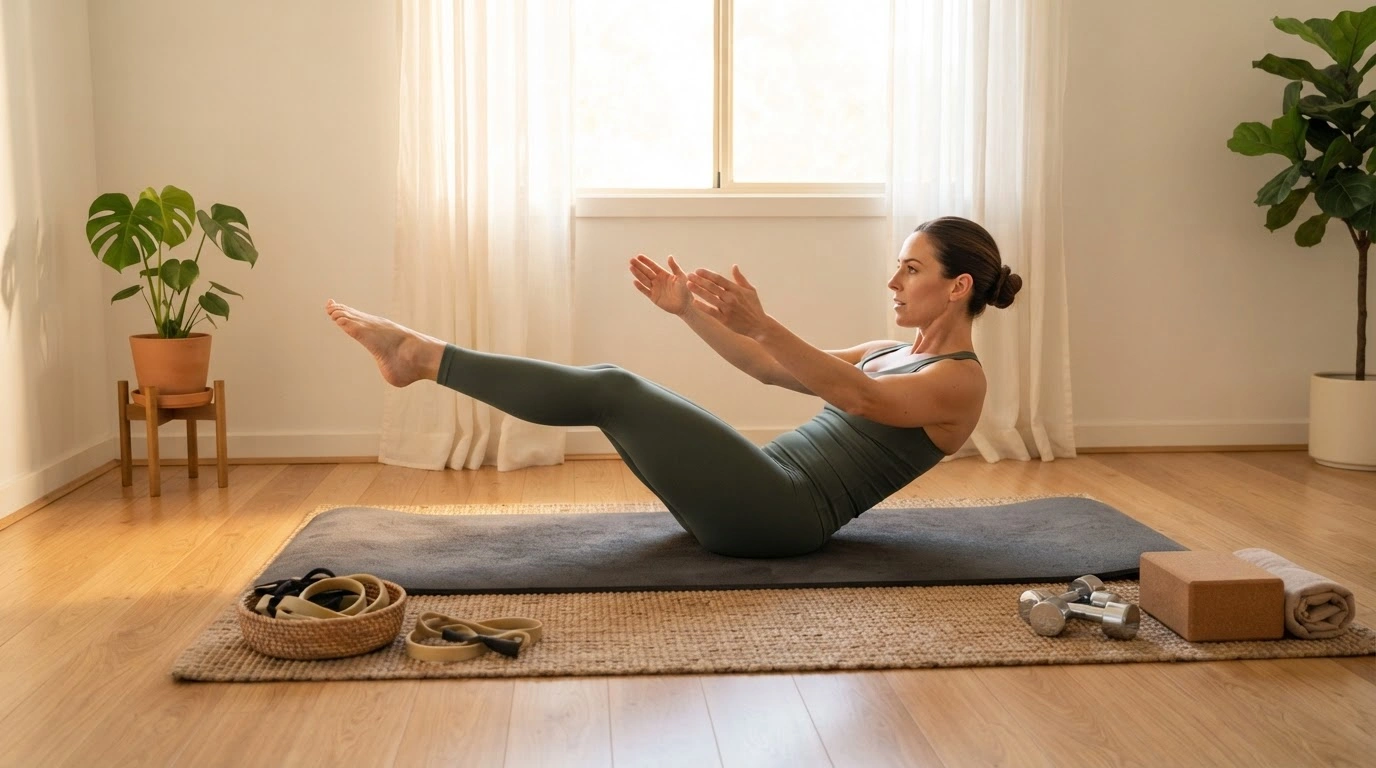
Start by looking for an area roughly the size of an exercise mat with a little clearance around it, about two metres by one and a half. You should be able to lie down with arms stretched overhead and swing a leg out to the side without hitting furniture. Natural light is a bonus, as is a view of something pleasant, even if that is just a plant on the windowsill. Try to avoid high traffic paths where you will be stepped over, and check that the ceiling is high enough to reach upward comfortably.
Getting the Floor Right
Flooring makes a real difference to comfort. Timber, laminate and vinyl are all fine under a good quality mat. Thick carpet can feel unstable for balance work, so a firmer mat or a thin board underneath may help. On hard tiles or concrete, a slightly thicker mat protects knees and hips. If the corner doubles as part of a living area, a low pile rug that defines the zone can be rolled back when it is time to exercise.
Light, Air and Temperature
A space that is stuffy or gloomy will not tempt anyone. Position the corner near a window if possible, both for daylight and for fresh air. In the evening, a lamp with a warm bulb is kinder than a bright overhead light, particularly for slower stretching sessions. A small fan can be useful in summer. In cooler months, warming the room a little before you start makes it easier to relax into movement.
Storage That Keeps Things Tidy
Equipment left lying around quickly becomes clutter, and clutter is the enemy of a calm space. A lidded basket or a low cabinet can hold a rolled mat, resistance bands, a small ball and a foam roller. Wall hooks or a narrow shelf keep items off the floor without taking up much room. If you prefer to see your gear as a prompt to use it, choose pieces in colours that suit the room so they look intentional.
A Few Pieces of Equipment Worth Having
A supportive mat is the foundation. Beyond that, a set of resistance bands, a soft Pilates ball, a foam roller and a pair of light hand weights cover a wide range of exercises and fit in a single basket. A firm cushion or yoga block helps with seated positions. There is no need to buy everything at once. Start with the mat and add items as you discover what you enjoy.
Designing for Calm
The look and feel of the corner affects how likely you are to use it. Soft, muted colours and natural textures such as timber, linen and wool help create a restful mood. A plant or two adds life. If the space faces a busy part of the room, a folding screen or a tall bookshelf can provide a sense of separation. A full length mirror is useful for checking alignment and has the added benefit of making a small area feel bigger. Some people like a small speaker for music or guided sessions.
Balancing Home Practice With Guided Sessions
Home practice is convenient, but it works best alongside some form of instruction. Learning good technique from a qualified teacher means the time you spend on the mat at home is more effective. Many people attend Reformer Pilates in Auckland during the week and use their home corner for shorter mat sessions in between. Equipment such as the reformer offers a kind of supported resistance that is hard to replicate at home, while mat work reinforces the same principles of control and alignment.
Listening to Aches and Pains
More time working from home has meant more hours on dining chairs and sofas for many people, and stiff necks and sore lower backs have followed. A movement corner is a good reminder to take breaks. If discomfort persists, or if you are returning to exercise after an injury, it is wise to have it checked before pushing on. A visit to a physio in Auckland can clarify what is going on and which exercises are suitable to do at home.
Making It a Habit
The best designed space is only useful if it gets used. Linking movement to an existing routine helps, such as ten minutes after the morning coffee or before the evening meal. Keeping the mat visible, or already rolled out, removes one more barrier. Start small. Five to ten minutes most days is more sustainable than an hour once a fortnight. Studios such as Peak Pilates often suggest simple home exercises that complement what is covered in class, which can give your home sessions some structure.
A Small Space With a Big Payoff
A home movement corner does not have to be elaborate or expensive. With a clear patch of floor, a comfortable mat, decent light and somewhere to tuck things away, you have everything you need. Over time, that little corner can become one of the most valued spots in the house.
Disclaimer: This article is provided for general informational purposes only and is not intended as medical or health advice. Everyone's situation is different, and the information here may not apply to yours. Please consult a qualified healthcare professional before making any decisions about your health, treatment, or wellbeing based on the content of this article.
Editorial contribution by Elliott SEO Auckland