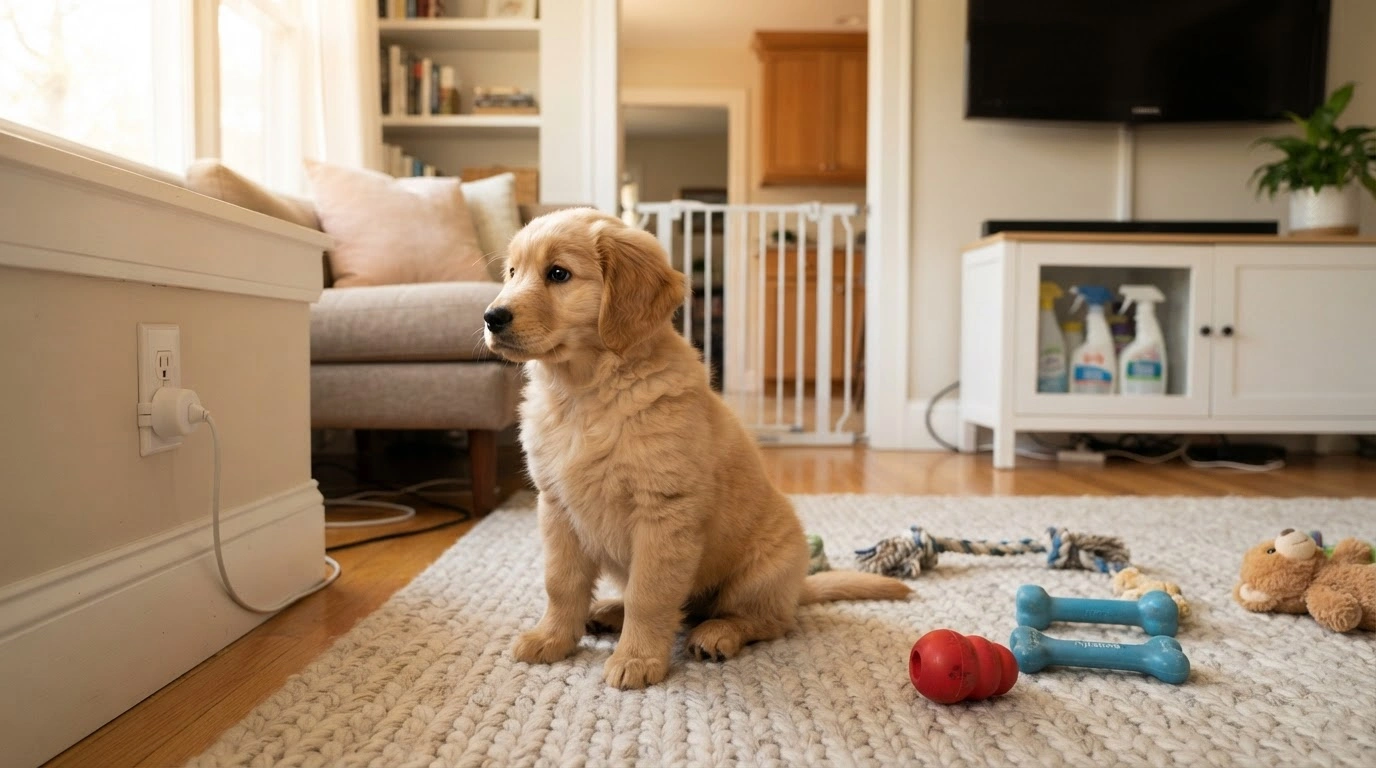
Welcoming a new puppy can be one of the most exciting events in any home, on par with moving into a new house or adding a new member to the family. However, prior to your puppy going on their exploration around the house, it is important to make sure your home is puppy safe. With their fast and curious nature, coupled with their mouthy tendencies, anything that is within their reach (and a significant amount of things that may not have previously been considered within reach) can be bitten, chased or knocked over.
The lucky part is, puppy proofing does not require a renovation. Rather it requires some foresight and rearrangement. Below is a checklist by room to help you puppy proof your home before or immediately after the arrival of your new puppy.
Before You Start: Think Like a Puppy
Puppies approach the world by sniffing and mouth exploring at ground level. When puppy proofing, try getting down on your hands and knees and look around each area at ground level (from a puppy's point of view). Any object hanging down, dropped or at a puppy's nose level could be seen as a potential hazard or chew toy.
If you don't currently own a puppy, take the time to do some research about your puppy's breeder. A puppy produced in an ethical and well managed breeder environment is more likely to be healthier, more socially adaptable and easier to adjust to. Groups such as Responsible Pet Breeders Australia allow you to research a breeder prior to purchase and give you peace of mind down the line.
Kitchen
Puppies cause trouble in the kitchen. There is food smell, food on the floor and low cupboard space.
- Secure bin. Use a bin with a locking lid or store the bin in a cupboard with a child-proof lock.
- Add locks to cupboards. Lock any cupboards within a puppy's nose height. This is especially important for cupboards containing chocolate, cleaning products or plastic/foil.
- Clear tables and counter tops of food - Puppies grow quickly so ensure that food is cleared from tables and counter tops.
- Cover electrical cables. Cover cables from electrical equipment. Alternatively hide cables behind pieces of furniture.
- Store human medications. Store human medications in a high cupboard and not on a table or in a plastic bag.
Living Room
Most family time will be spent here. This area should be both puppy friendly and puppy safe.
- Conceal cords for electronics, phone chargers and lamps. Puppies love to chew on cords.
- Eliminate small items that can be swallowed such as coins, small pieces from children’s toys and batteries from remotes.
- Secure any freestanding furniture or bookshelves that may tip over when climbed on.
- Research houseplants. Some common houseplants are toxic to our dogs. Either move these plants out of your puppy’s reach or replace them with non-toxic plants.
- Store breakable items high. At least until your puppy stops chewing everything.
Bedrooms
Bedrooms often contain some of the most tempting — and most dangerous — items for a puppy.
- Clear the floor of shoes, socks, and clothing. These are classic chew and swallow hazards.
- Store medications and cosmetics in closed drawers, not on nightstands.
- Tuck away phone and laptop chargers.
- Consider a puppy gate if you want to keep your pup out of the bedroom initially, especially overnight while they're still house-training.
Bathroom
Small, tiled, and full of things puppies shouldn't get into — bathrooms need a few quick fixes.
- Keep the toilet lid down to prevent drinking from the bowl (especially if you use toilet cleaning drops).
- Store cleaning products, medications, and cosmetics in a latched cabinet.
- Keep the bin covered or out of reach, particularly if it contains cotton balls, floss, or razors.
- Wipe up any spilled soaps or shampoos promptly, since some contain ingredients unsafe for dogs.
Laundry
Often overlooked, but laundry rooms combine chemicals with cosy, den-like spaces puppies love to burrow into.
-
Store detergent pods and cleaning products on a high shelf or in a latched cupboard — these are highly toxic if chewed.
-
Keep the dryer door closed and always check inside before starting a load; puppies are drawn to warm, enclosed spaces.
-
Watch for dangling cords from irons or other appliances.
Garage and Storage Areas
If your puppy will have any access to the garage, treat it as a high-risk zone.
-
Store antifreeze, fertilisers, and pesticides on high shelves — antifreeze in particular is extremely toxic and has a sweet taste dogs are drawn to.
-
Coil up power tool cords and store sharp tools out of reach.
-
Check for small hardware like screws, nails, or zip ties on the floor.
Outdoor Areas and Backyard
A secure yard is one of the best investments you can make for a new puppy.
- Check fencing for gaps a puppy could squeeze through, and make sure gates latch securely.
- Remove toxic plants and mulches — cocoa mulch, for example, is appealing to dogs but dangerous if eaten.
- Store garden chemicals and tools in a locked shed.
- Cover pools, ponds, or water features, or block puppy access until they're older and supervised.
- Check for holes in the yard or gaps under fences where a determined puppy might dig their way out.
A Few General Habits Worth Building Early
- Get on the floor and audit often. Puppy-proofing isn't a one-time job — as your puppy grows and gets more mobile, new hazards will appear.
- Use baby gates strategically to close off rooms that are harder to fully puppy-proof, like home offices or bathrooms.
- Give them an appropriate outlet. A well-stocked toy basket with sturdy chew toys reduces the temptation to chew furniture or cords.
- Supervise, especially early on. No amount of proofing replaces keeping an eye on a new puppy during their first few weeks home.
Setting Your Puppy Up for Success
Puppy proofing is really about eliminating hazards and temptation allowing your puppy to explore safely while learning the boundaries within your home. With some patience and consistency puppy proofing will allow a much smoother first few months with your puppy and your furniture.
If you are still in the puppy choosing process, put as much effort into finding the right breeder as you do into puppy proofing your home. There are resources available such as Responsible Pet Breeders Australia that can assist with confirming the breeding and ethical practices of a breeder, provide information regarding specific breeds and provide checklists for bringing a new puppy into your home. Using these resources will ensure you begin this new phase on the right paw.